

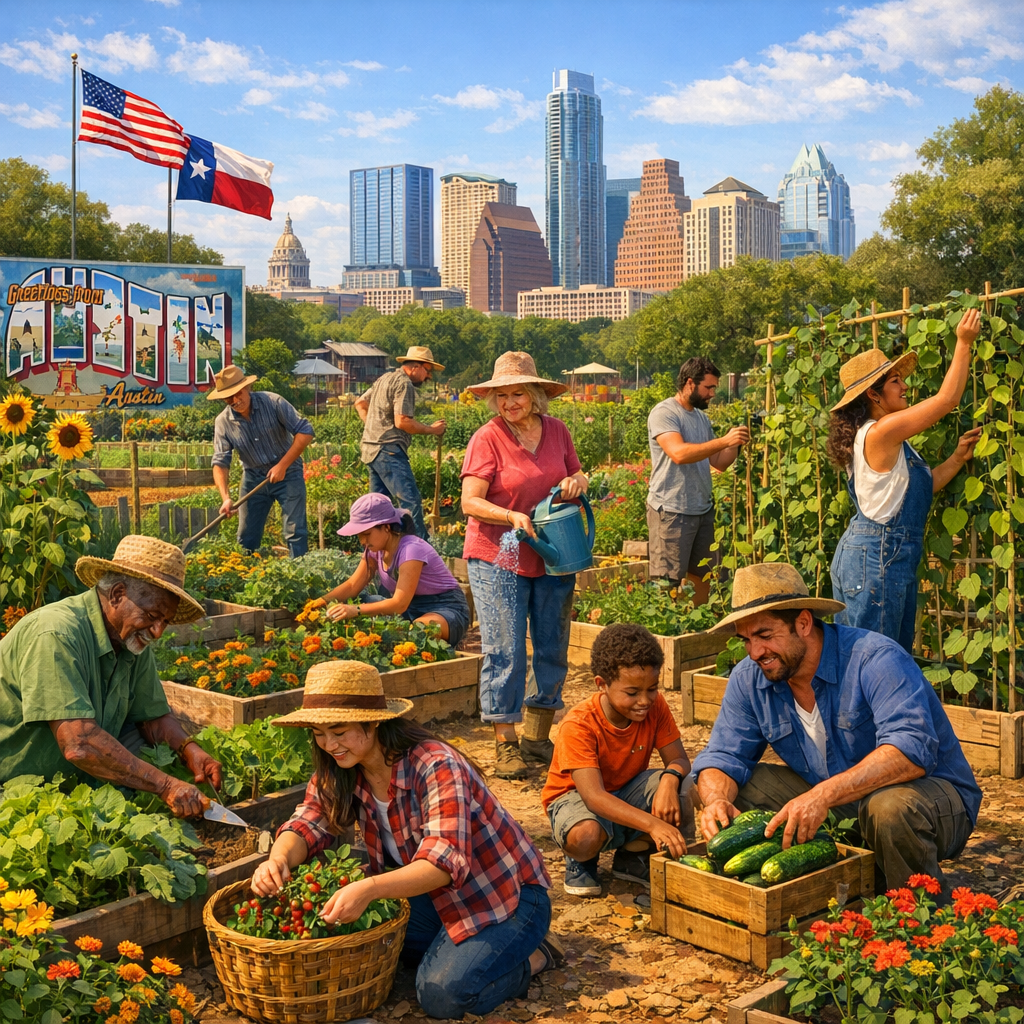
In the heart of Austin, community gardens have blossomed into vibrant spaces where residents come together to cultivate not only plants but also relationships and a shared commitment to sustainability. These gardens offer a unique opportunity for individuals to engage with their neighbors, learn about organic gardening, and enjoy the fruits of their labor.
Joining a Community Garden
For those interested in becoming part of a community garden, Austin offers numerous options. The Austin Parks and Recreation Department provides a comprehensive list of community gardens open to the public. Prospective members can reach out directly to these gardens to inquire about plot availability and membership requirements.
Starting a New Community Garden
Individuals or groups looking to establish a new community garden on city-owned parkland can follow a structured application process. The Community Gardens Program supports such initiatives by guiding applicants through the necessary steps, including recruiting members, selecting a suitable site, and obtaining the required permits. The application cycle typically opens in August, with reviews beginning in mid-September.
Spotlight on Local Gardens
Austin is home to several thriving community gardens, each with its unique character and mission. For instance, the Deep Eddy Community Garden, established in 1983, is one of the city’s oldest community gardens. Located in Eilers Park along the Ann and Roy Butler Hike and Bike Trail, it boasts rich, fertile soil and a dedicated group of volunteers committed to organic gardening practices.
Another notable example is the South Austin Community Garden, founded in 1994. This garden comprises 33 individual plots, a large co-op garden, and an orchard. Members gain hands-on experience with organic practices suited to the local environment, exchange knowledge, and harvest fresh produce.
Benefits of Community Gardens
Community gardens offer numerous benefits beyond providing fresh produce. They serve as educational platforms where individuals can learn about sustainable gardening practices and environmental stewardship. These gardens also foster a sense of community, bringing together people from diverse backgrounds to work towards a common goal. Additionally, they contribute to urban green spaces, enhancing the aesthetic appeal of neighborhoods and promoting biodiversity.
In conclusion, Austin’s community gardens are more than just plots of land for growing vegetables; they are vital community hubs that promote sustainability, education, and social connections. Whether you’re an experienced gardener or a novice looking to learn, there’s a place for you in one of Austin’s many community gardens.