

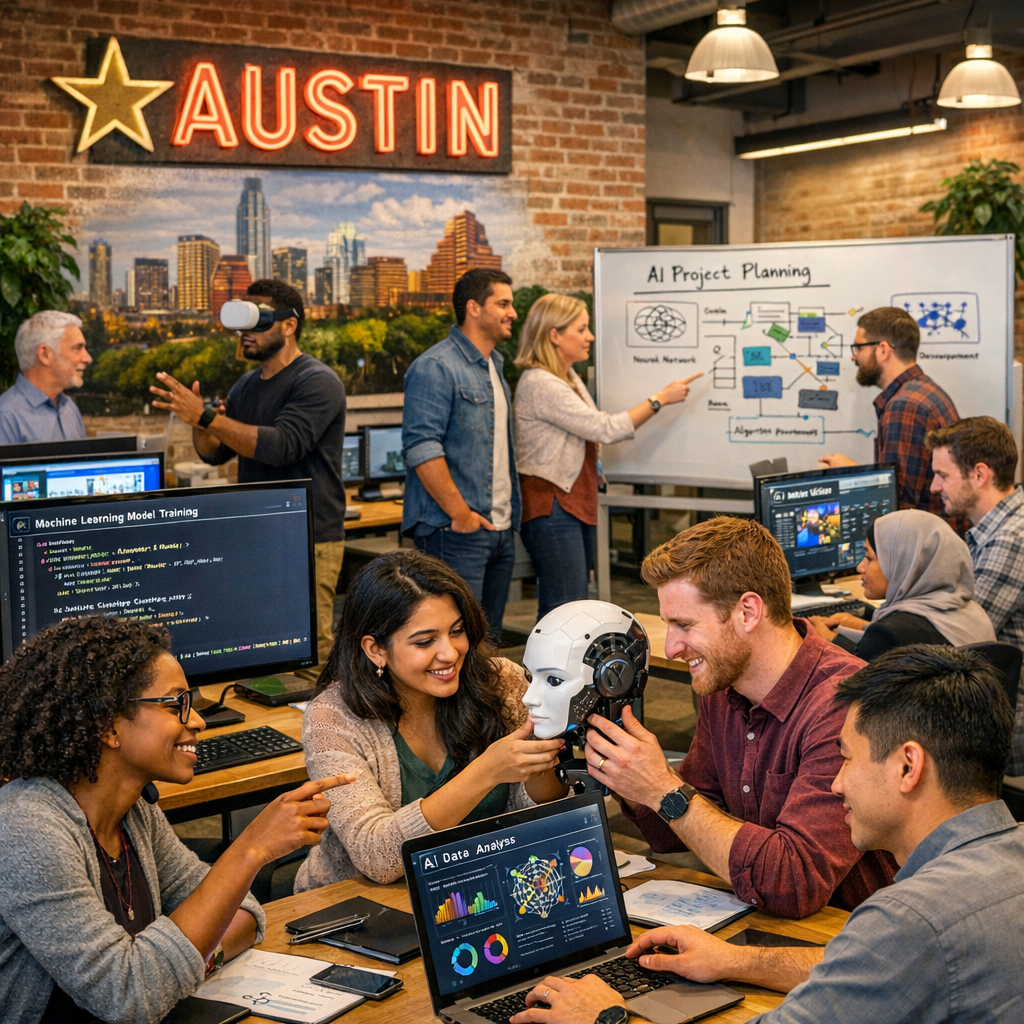
Austin, Texas, has rapidly emerged as a significant center for artificial intelligence (AI) innovation, fostering a dynamic ecosystem of startups and established tech companies. This growth is not only transforming the local economy but also impacting the daily lives of residents.
AI Startups Leading the Charge
Several AI-focused startups have chosen Austin as their home base, contributing to the city’s reputation as a tech hub. For instance, Apptronik is developing humanoid robots designed for various applications, including supply chain management and elder care. With substantial funding, the company is at the forefront of integrating robotics into everyday tasks.
Another notable startup, webAI, has achieved a valuation exceeding $2.5 billion. The company specializes in running AI directly on devices, enhancing privacy and performance. Initially serving corporate clients, webAI is now expanding into the public sector and consumer markets.
Investment and Economic Impact
The influx of AI companies has attracted significant investment to Austin. In the first quarter of 2026 alone, AI firms in the city raised an estimated $1.2 billion, marking a 35% increase from the previous year. This surge underscores Austin’s growing prominence in the AI sector and its appeal to investors.
Academic Contributions and Talent Pipeline
The University of Texas at Austin plays a pivotal role in supporting the AI ecosystem. With substantial research expenditures and a commitment to innovation, the university contributes to the development of new technologies and the cultivation of a skilled workforce. This academic foundation ensures a steady pipeline of talent for the city’s burgeoning tech industry.
AI’s Influence on Daily Life
The proliferation of AI technologies in Austin extends beyond the tech industry, influencing various aspects of daily life. For example, the real estate platform Homa utilizes AI to offer homebuyers rebates, streamlining the purchasing process and reducing costs. Additionally, local music app Earbuds has integrated generative AI to enhance user experience by facilitating personalized playlist creation and music discovery.
Conclusion
Austin’s embrace of AI innovation is reshaping the city’s economic landscape and enhancing the quality of life for its residents. As startups continue to thrive and established companies invest in AI technologies, Austin stands poised to remain at the forefront of this technological revolution.