

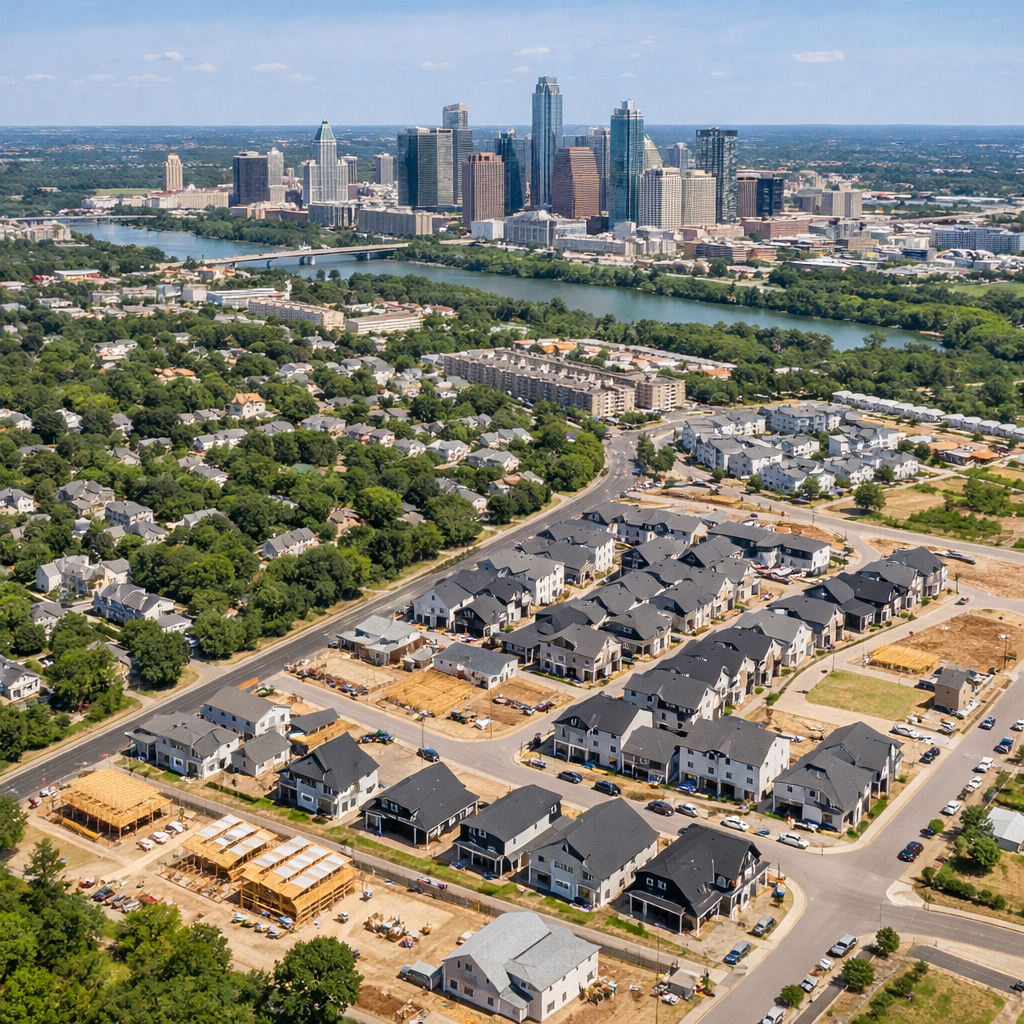
Austin’s housing market is undergoing significant changes, reflecting broader economic trends and local developments. Understanding these shifts is crucial for prospective buyers, sellers, and renters navigating the city’s real estate landscape.
Market Trends
Recent data indicates a decline in home values across Austin. According to Zillow, the average home value in Austin is $489,253, marking a 6.4% decrease over the past year. This trend suggests a cooling market, offering potential opportunities for buyers seeking more favorable prices.
Inventory levels have also seen adjustments. Realtor.com reports that active listings in Austin have increased by 3.89% year-over-year, totaling 5,711 properties. This rise in available homes provides buyers with a broader selection, potentially easing the competitive pressures that characterized previous years.
Rental Market
The rental sector mirrors these trends. Median rent in Austin has decreased by 6.23% over the past year, now averaging $1,850 per month. This decline may offer relief to renters who have faced escalating costs in recent years.
Local Developments
Several significant developments are poised to impact Austin’s housing landscape:
Affordable Housing Initiatives
The NRP Group, in partnership with the Housing Authority of Travis County, has commenced construction on a 348-unit affordable housing community in Southeast Austin. This project aims to provide quality housing for households earning up to 60% of the Area Median Income, addressing the city’s pressing need for affordable living options.
Mixed-Use Redevelopments
The Greater Austin YMCA has proposed a major redevelopment of its TownLake facility into a mixed-use complex. The plan includes a modernized YMCA campus, residential housing, child care services, and expanded social programs. Notably, the project envisions up to 750 condominiums, with at least 90 units designated as affordable housing for families earning 30% to 80% of Austin’s median income.
Adaptive Reuse Projects
The Seaholm development exemplifies Austin’s commitment to preserving historical sites while meeting modern housing demands. This project transformed a 1950s power plant into a vibrant urban oasis, featuring office spaces, high-rise condos, retail shops, and communal areas. Such adaptive reuse projects contribute to the city’s unique character and provide diverse housing options.
Conclusion
Austin’s housing market is in a state of flux, influenced by declining home values, increasing inventory, and ambitious development projects. For those considering entering the market, staying informed about these trends and developments is essential. As the city continues to evolve, opportunities arise for buyers, renters, and investors to find their place in Austin’s dynamic real estate environment.